
Contributed talk at Joint European Magnetic Symposia 2022 (JEMS2022) in Warsaw, Poland, 24-29 July 2022.
Abstract
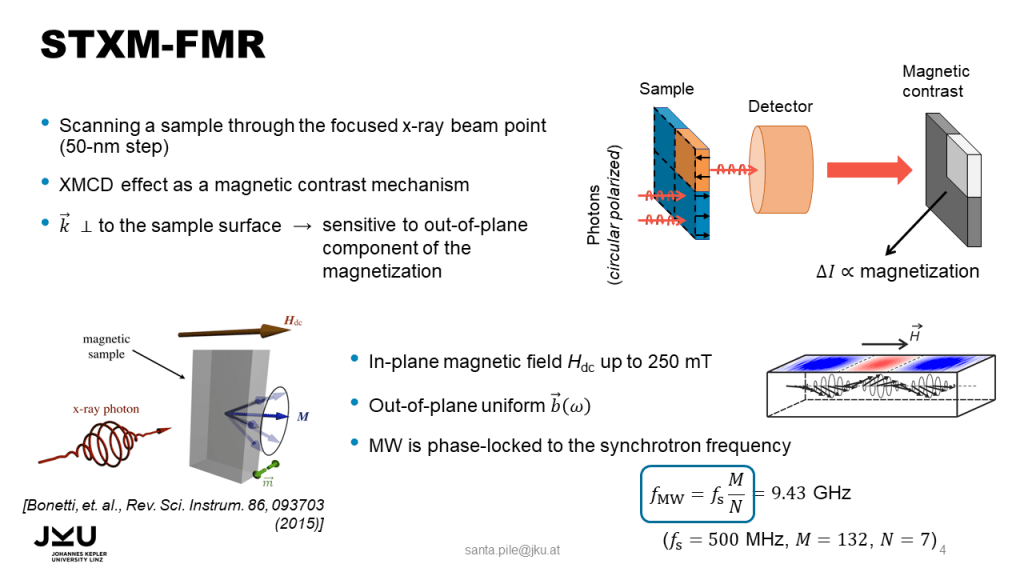
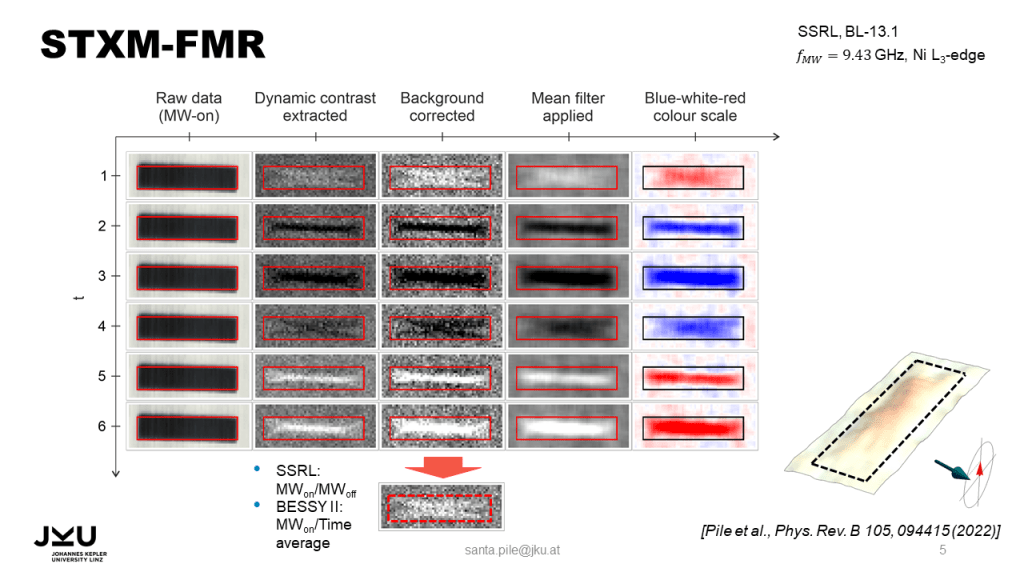
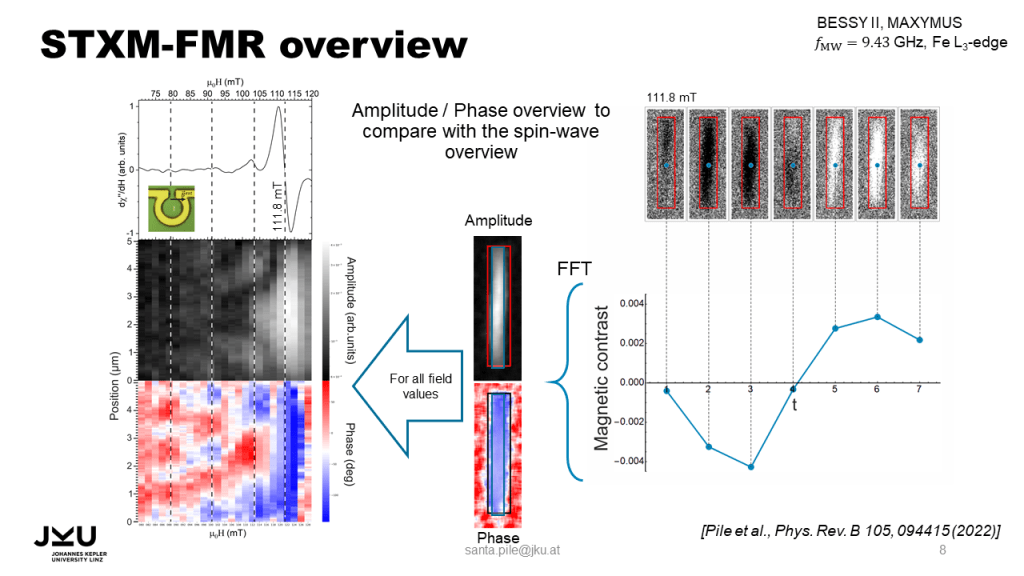
Over the past decades charge-based computing devices decreased drastically in size, coinciding with an increasing and even limiting heat dissipation, which triggered an active search for new ways of information processing. In that regard, magnons or spin waves are to be one of the options to replace the transfer of electronic charges in logic devices [1]. In this work the focus is put on a fundamental understanding of the dynamic magnetic properties of confined rectangular structures, as this is a prerequisite for the development of nanoscale computational devices. The development of planar microresonators/microantennas allows for measuring FMR of a single ferromagnetic microstrip including resonance lines corresponding to spin-wave excitations [2]. Planar microresonators made it possible to apply TR-STXM [3] using a phase-locked FMR excitation scheme (STXM-FMR). STXM-FMR enables direct, time-dependent imaging of the spatial distribution of the precessing magnetization across the sample during FMR excitation with elemental selectivity [4].
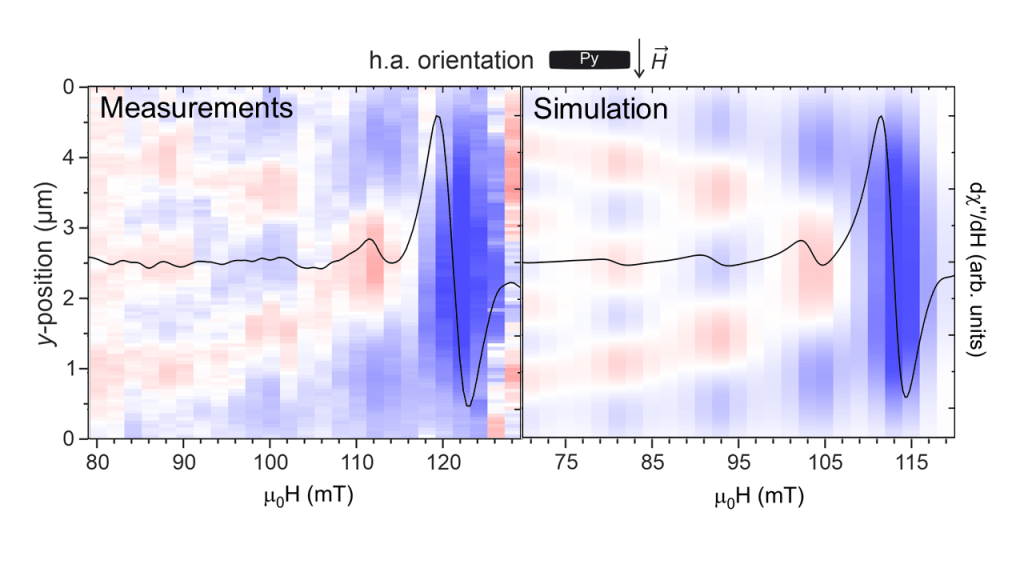
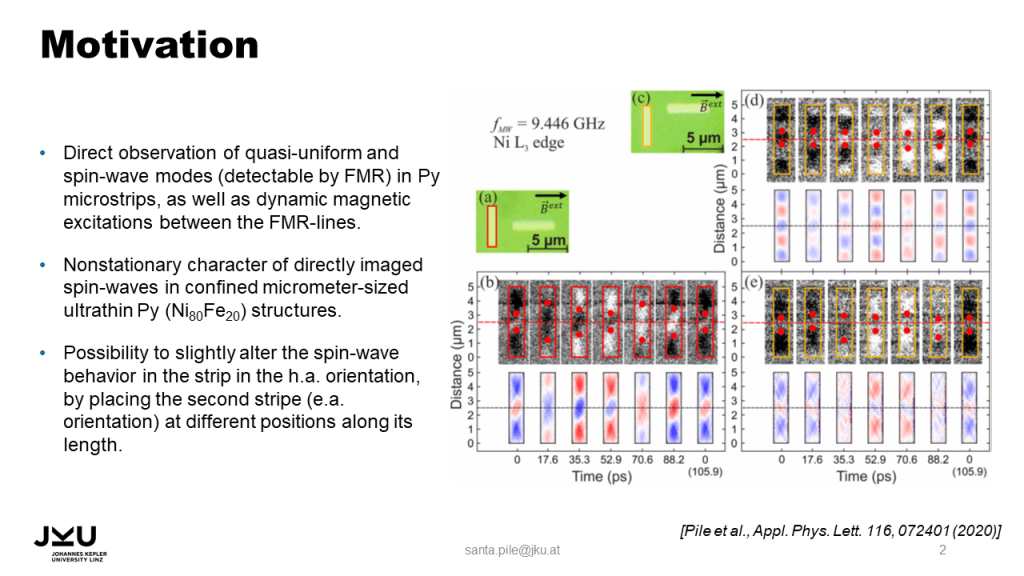
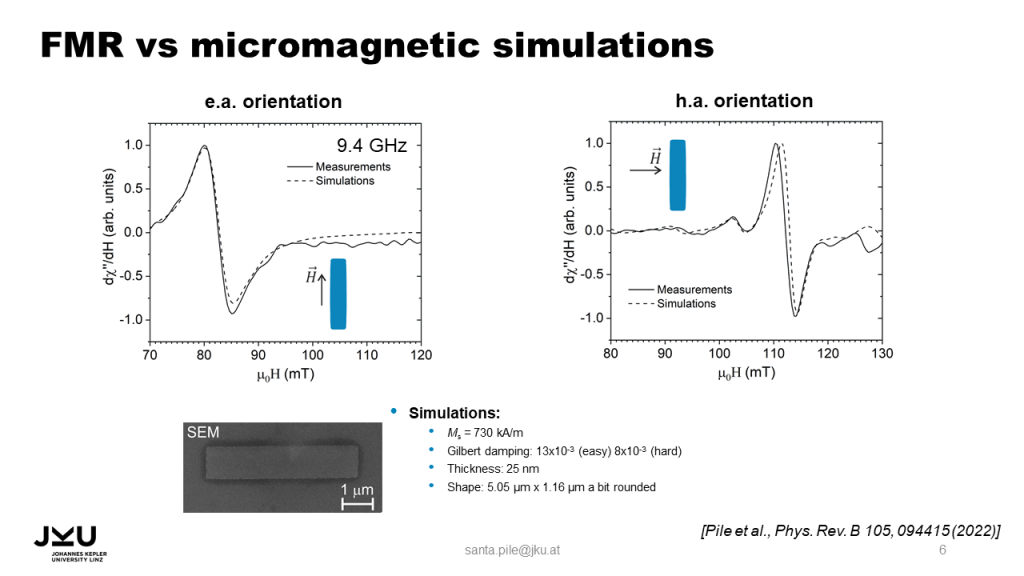
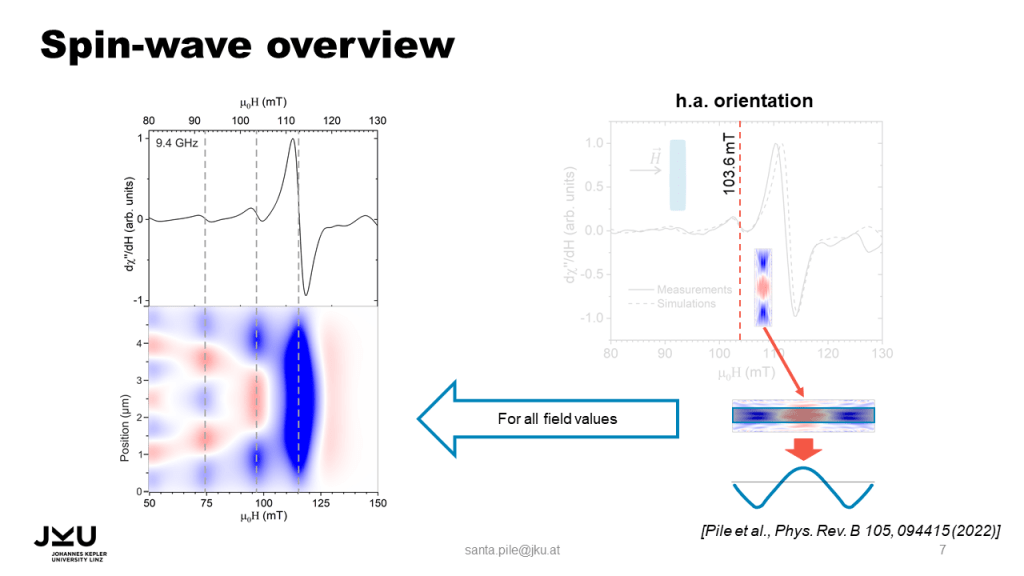
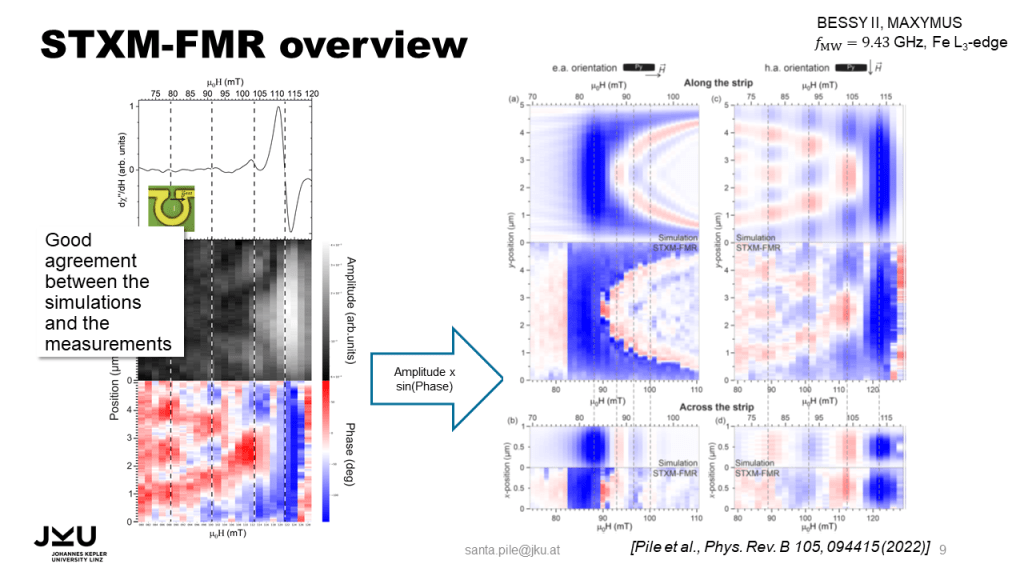
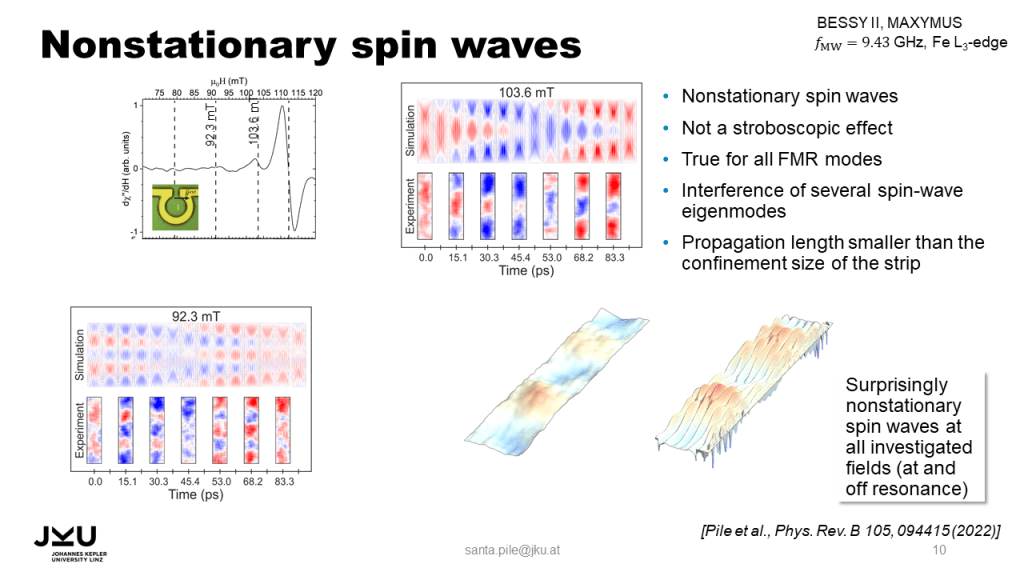
In the presented work FMR modes in a single rectangular Ni80Fe20 (Py) microstrip were directly imaged using STXM-FMR and the findings were corroborated by micromagnetic simulations [5]. An example overview of the spin-wave profiles for the hard axis (h.a.) orientation of the µm3 Py strip is shown in Figure 1 combined with the corresponding FMR spectra on the foreground. Although under uniform excitation in a single confined microstructure typically standing spin waves are expected, all imaged spin waves have shown a nonstationary character both, at and off resonance, the latter being additionally detected with FMR. The effect of the edge quality on the spin waves was observed in micromagnetic simulations.
Slides


 Santa Pile